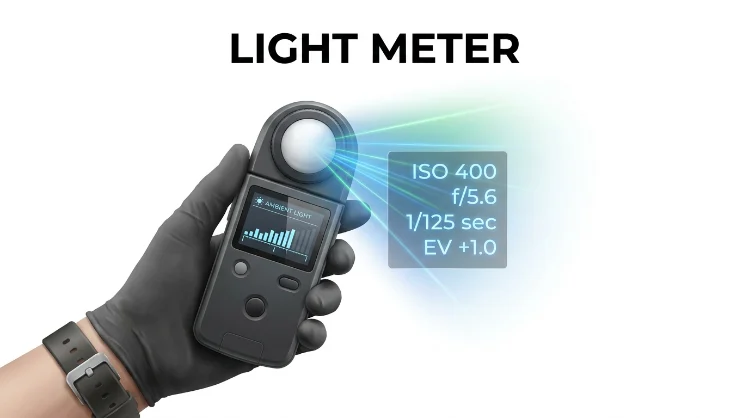

A light meter is a device that measures the amount of light in a scene to help photographers and cinematographers determine the correct exposure settings. It provides precise readings of luminance or illuminance, allowing you to set your camera’s ISO, aperture, and shutter speed accurately.
Handheld light meters offer superior accuracy compared to in-camera meters. They measure incident light (light falling on the subject) or reflected light (light bouncing off the subject), giving you creative control over exposure.
Ever taken a photograph that turned out too dark or too bright, despite your camera’s meter saying it was perfect? This common frustration is exactly why understanding the light meter matters. Whether you’re shooting film, working in challenging lighting conditions, or simply want more creative control, a dedicated light meter can transform your photography.
A light meter isn’t just for professionals anymore. From landscape photographers balancing harsh sunlight to portrait artists sculpting with studio strobes, these devices help you nail exposure every time. Even with modern digital cameras featuring sophisticated metering systems, there are compelling reasons to add a handheld meter to your kit.
In this comprehensive guide, we’ll explore everything you need to know about light meters. We’ll break down the different types, how they work, and when to use each one. Whether you’re a beginner wondering what a light meter does or a seasoned shooter considering an upgrade, this article will help you master exposure once and for all.
What is a Light Meter?
Definition and basic explanation of the device and its primary function in photography and cinematography.
Types of Light Meters
- Incident Light Meters – Measure light falling on the subject
- Reflected Light Meters – Measure light reflecting from the subject
- Spot Meters – Measure light from a narrow angle
- Flash Meters – Measure flash and strobe output
How Does a Light Meter Work?
Technical explanation of the measurement process, sensor technology, and reading interpretation.
In-Camera Metering vs Handheld Light Meters
Comparison table and explanation of when each is superior.
Why You Need a Light Meter in Modern Photography
- Accuracy in difficult lighting
- Consistency in studio work
- Film photography reliability
- Creative exposure control
How to Use a Light Meter: Step-by-Step Guide
Practical instructions for both incident and reflected metering techniques.
Popular Light Meter Brands and Models
- Sekonic – L-308X, L-758D, L-858D
- Godox – GM55, GM88
- Minolta/Kenko – Auto Meter series
- Gossen – Digisky, Luxmeter
Light Meter Apps: Are They Good Enough?
Review of smartphone alternatives and accuracy comparisons.
Light Meter Maintenance and Calibration
Tips for keeping your meter accurate and long-lasting.
Common Light Meter Mistakes and How to Avoid Them
Practical advice for beginners and intermediate photographers.
TABLES
Comparison Table: In-Camera Metering vs Handheld Light Meter
| Feature | In-Camera Metering | Handheld Light Meter |
| Accuracy | Variable, reflected reading | Highly accurate |
| Light Measurement | Reflected only | Incident & Reflected |
| Flash Metering | Limited | Excellent |
| Studio Use | Moderate | Essential |
| Film Photography | Usable but risky | Preferred |
| Convenience | Built-in, always ready | Extra gear to carry |
| Price | Included with camera | Additional cost |
| Learning Curve | Simple | Moderate |
Light Meter Types Comparison
| Type | Measures | Best For | Accuracy |
| Incident | Light falling on subject | Portraits, studio, most genres | Highest |
| Reflected | Light bouncing off subject | General scenes, quick readings | Good |
| Spot | Light from narrow angle | Landscape, zone system | Very High |
| Flash | Flash duration/output | Studio strobes, off-camera flash | High |
FAQs
1. What exactly does a light meter do?
A light meter measures the intensity of light in a scene and displays readings that help you set your camera’s exposure. It gives you specific values for aperture, shutter speed, and ISO that will produce a properly exposed image. This eliminates guesswork and helps you achieve consistent results.
2. Do I need a light meter if my camera already has one?
Your camera’s built-in meter works well for many situations, but a handheld light meter provides superior accuracy, especially in tricky lighting. Incident light meters measure the light hitting your subject, not reflecting from it, giving you more reliable readings in high-contrast scenes or when your subject is backlit.
3. What’s the difference between incident and reflected light meters?
Incident light meters measure light falling directly onto your subject and are highly accurate regardless of subject color. Reflected light meters measure light bouncing off your subject, which can be influenced by surface tones. Incident meters are generally preferred for consistent, reliable exposure readings.
4. How do I use a light meter for film photography?
For film, set your desired ISO on the meter and hold it close to your subject to take an incident reading. Use the recommended aperture and shutter speed. For reflected readings, point the meter at your subject from your shooting position. Film benefits greatly from the accuracy of handheld meters to avoid wasting shots.
5. What is a spot meter and when should I use it?
A spot meter measures light from a very narrow angle (typically 1-5 degrees). It’s ideal for landscape photography, the zone system, and scenes with extreme contrast. You can meter specific areas of your composition and decide which tones to preserve, giving you creative exposure control.
6. Can I use my smartphone as a light meter?
Yes, smartphone apps can function as light meters and many produce surprisingly accurate results. However, they rely on your phone’s camera sensor, which is calibrated for phone photography rather than professional exposure work. They’re useful for backup or learning, but not for critical professional work.
7. What is the best light meter for beginners?
The Sekonic L-308X is widely considered the best light meter for beginners. It’s affordable, easy to use, and handles both ambient and flash metering. It offers both incident and reflected reading modes, making it versatile enough for various photography genres while remaining beginner-friendly.
8. How do I calibrate my light meter?
Most modern digital light meters don’t require user calibration. If you suspect your meter is inaccurate, compare it against a known-accurate meter or a gray card in consistent lighting. Some meters allow fine-tuning via internal settings, but this should only be done by experienced users.
9. What brands make reliable light meters?
Sekonic dominates the professional market with models like the L-858D and L-308X. Godox offers excellent budget-friendly options including the GM55 and GM88. Gossen produces high-quality meters for both photography and industrial use. Kenko (formerly Minolta) also manufactures reliable light meters.
10. Is a light meter worth it for digital photography?
While digital cameras have excellent built-in meters, a handheld light meter still offers significant benefits. It ensures consistent exposure across multiple shots, works perfectly in mixed lighting conditions, and helps you build a deeper understanding of light. If you shoot studio work or film, it’s practically essential.
CONCLUSION
Mastering exposure is one of the most important skills a photographer can develop, and a light meter is your most reliable tool in this journey. While modern cameras offer impressive metering capabilities, the accuracy and creative control provided by a dedicated handheld meter remain invaluable across all genres of photography.
Whether you’re shooting film with its unforgiving exposure margins, working in a studio with complex lighting setups, or simply striving for perfection in your outdoor images, a good light meter will pay for itself many times over. The learning curve is gentle, and the results are immediately visible in your work.
Start with a versatile incident meter like the Sekonic L-308X and practice regularly. Learn to read light intuitively while verifying with your meter. Over time, you’ll develop an eye for exposure that combines technical accuracy with artistic vision. Remember that a light meter doesn’t replace your creative judgment—it enhances it. The best photographers use their meters as a starting point, then adjust based on their artistic intent.
As technology continues to evolve, the fundamental principles of light measurement remain essential. Whether you choose a classic analog meter, a modern digital one, or even a reliable smartphone app, understanding how light meters work will make you a better, more confident photographer. Embrace this tool, and watch your images transform.