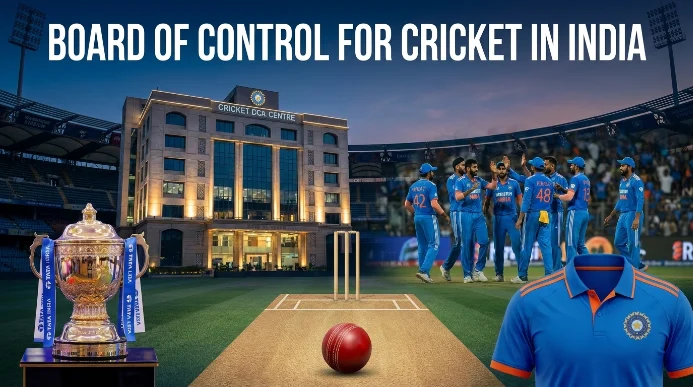

The Board of Control for Cricket in India (BCCI) is the national governing body for cricket in India. Established in December 1928, it manages all aspects of cricket administration including men’s, women’s and junior national teams, domestic tournaments like the Ranji Trophy, and commercial properties such as the Indian Premier League (IPL) and Women’s Premier League (WPL).
Headquartered at the Wankhede Stadium in Mumbai, the BCCI operates as a private autonomous society registered under the Tamil Nadu Societies Registration Act. It is widely recognized as the wealthiest cricket board globally, wielding significant influence over international cricket scheduling and governance.
Cricket is more than a sport in India it is a cultural phenomenon that unites over a billion people. At the heart of this cricketing empire sits the Board of Control for Cricket in India, the powerful governing body that shapes every facet of the game in the country. From selecting national teams to organizing blockbuster tournaments like the IPL, the BCCI’s reach extends far beyond India’s borders.
Understanding the Board of Control for Cricket in India is essential for anyone who follows the sport. Whether you are a casual fan wondering how Indian cricket is administered, an aspiring player hoping to understand the system, or a cricket enthusiast curious about the board’s global influence, this guide covers everything you need to know. We will explore its fascinating history, organizational structure, key functions, financial might, and the controversies that have shaped its journey.
ARTICLE STRUCTURE
What is the Board of Control for Cricket in India?
The Board of Control for Cricket in India (BCCI) is the supreme governing body for cricket in India. It is responsible for the administration, regulation, and development of the sport across the country. The BCCI manages everything from grassroots cricket to the senior national teams that represent India on the global stage.
As a member of the International Cricket Council (ICC), the BCCI holds the exclusive authority to represent India in international cricket matters. It organizes domestic competitions, selects national squads, negotiates media rights, and oversees the commercial aspects of the game. The board functions independently, generating revenue through media rights, sponsorships, ticket sales, broadcasting agreements, and commercial cricket operations.
History and Establishment
The BCCI was formed in December 1928 following a meeting at the historic Roshanara Club in Delhi. It was established as a society and initially had only six associations affiliated to it. The board was registered under the Societies Registration Act in 1940.
India made its Test debut in 1932, becoming the sixth team to be accorded Test status. A national competition followed in 1934, named the Ranji Trophy after the legendary cricketer KS Ranjitsinhji.
The board’s journey from a modest administrative body to a global cricketing powerhouse is remarkable. Key milestones include:
- 1983: India’s World Cup victory elevated the BCCI’s standing in world cricket
- 1987: The BCCI persuaded the ICC to take the World Cup out of England for the first time
- 1992: Jagmohan Dalmiya’s rise commercialized TV rights, setting the BCCI on a path to immense wealth
- 2007: The inaugural Indian Premier League revolutionized cricket
- 2022: The BCCI introduced equal pay for men’s and women’s cricketers
Organizational Structure
The BCCI operates through a well-defined hierarchical structure:
General Body: Comprising representatives from 38 full-member state cricket associations, the General Body is the supreme decision-making authority.
Apex Council: The executive body consisting of office-bearers and player representatives that manages day-to-day operations.
Key Office-Bearers (2026):
- President: Mithun Manhas the 37th president and first from Jammu & Kashmir
- Vice-President: Rajeev Shukla
- Secretary: Devajit Saikia elected in August 2026, replacing Jay Shah
- Treasurer: Prabhtej Singh Bhatia
The BCCI also has specialized committees for selection, umpiring, and various other functions. The Indian Cricketers’ Association (ICA) has representation in the Apex Council, ensuring players have a voice in cricket administration.
Key Functions and Responsibilities
The BCCI’s responsibilities are vast and encompass every aspect of cricket in India:
National Team Management:
The board selects and manages the Indian men’s, women’s, and junior cricket teams. It appoints coaches, support staff, and schedules international tours.
Domestic Cricket:
The BCCI organizes a comprehensive domestic structure including:
- Ranji Trophy (first-class competition)
- Duleep Trophy
- Irani Cup
- Vijay Hazare Trophy (List A)
- Syed Mushtaq Ali Trophy (T20)
The 2026-27 domestic season features 1,788 matches across age groups and formats.
Commercial Operations:
The BCCI operates the Indian Premier League (IPL) the world’s most valuable cricket league and the Women’s Premier League (WPL).
Infrastructure Development:
The BCCI has established the Centre of Excellence (formerly National Cricket Academy) in Bengaluru, a world-class facility spanning 40 acres with three grounds and 86 pitches.
Grassroots Development:
Initiatives like “WPL Speed Queen” identify and nurture emerging women’s fast-bowling talent across the country.
Financial Power and Revenue
The BCCI is the richest cricket board in the world, with extraordinary financial muscle:
| Metric | Value |
| Projected Income (FY 2025-26) | ₹8,963 crore |
| Projected Surplus (FY 2025-26) | ₹6,700 crore |
| IPL Media Rights (2023-27) | ₹48,390 crore ($6.2 billion) |
| ICC Revenue Share (2024-27) | 38.5% (~$231 million annually) |
The BCCI’s revenue comes from multiple sources:
- IPL media rights and sponsorships
- International broadcast deals
- Central sponsorship agreements
- Ticket sales and merchandise
The board’s centralized money pool shares media rights and sponsorships equally among IPL franchises, with each team pocketing roughly $55 million annually.
BCCI and Global Cricket
The BCCI’s influence extends far beyond India’s borders. It receives approximately 38.5% of the ICC’s annual revenue more than England, Australia, Pakistan, New Zealand, Sri Lanka, West Indies, and Bangladesh combined.
This financial dominance translates into significant power:
- The BCCI heavily influences ICC scheduling and governance
- The board is exploring a longer IPL window of up to three months in the next FTP cycle
- India generates at least 62% of the ICC’s total revenue
The BCCI’s revenue share from the ICC for the 2023-2027 cycle is estimated at over $1.15 billion.
Governance Reforms and Legal Challenges
The BCCI has faced significant scrutiny over its governance practices:
Lodha Committee Reforms (2015):
The Supreme Court-appointed Lodha Committee recommended sweeping changes including:
- One State One Vote principle
- Cooling-off periods and tenure limits for office-bearers
- Age restrictions for top officials
- Separation of IPL governance from BCCI administration
Supreme Court Interventions:
In July 2016, the Supreme Court ordered implementation of the Lodha reforms, including a CAG nominee in the BCCI’s governance structure. The court has repeatedly criticized the BCCI, once stating officials were “behaving like lords” and needed to “fall in line”.
In 2026, the Supreme Court endorsed the One State One Vote principle, emphasizing that transparency and accountability are essential for organizations like the BCCI discharging public functions.
RTI Controversy:
In May 2026, the Central Information Commission ruled that the BCCI is not a public authority under the RTI Act, overturning its 2018 order. The commission held that the BCCI functions independently without “deep and pervasive” government control.
Women’s Cricket Revolution
The BCCI has dramatically transformed women’s cricket in recent years:
Equal Pay (2022):
The BCCI introduced equal match fees for men and women ₹15 lakh for a Test, ₹6 lakh for an ODI, and ₹3 lakh for a T20I.
Women’s Premier League (WPL):
The BCCI launched the WPL, similar to the IPL, creating a professional platform for women cricketers.
Development Initiatives:
- “WPL Speed Queen” initiative (2026) identifies U-19 and U-23 women’s fast-bowling talent
- Three specialist women’s coaches appointed at the Centre of Excellence
Former India captain Diana Edulji called these developments “a good step by the BCCI” showing “how much women’s cricket has grown”.
Domestic Cricket Structure
The BCCI oversees an extensive domestic cricket system:
| Tournament | Format | Significance |
| Ranji Trophy | First-Class | Premier domestic competition |
| Duleep Trophy | First-Class | Zonal selection tournament |
| Irani Cup | First-Class | Champion vs Rest of India |
| Vijay Hazare Trophy | List A | 50-over competition |
| Syed Mushtaq Ali Trophy | T20 | Premier T20 domestic event |
The 2026-27 domestic season begins with the Duleep Trophy on August 23, followed by the Irani Cup (October 1-5) and the Ranji Trophy starting October 11.
BCCI’s Centre of Excellence
The BCCI’s Centre of Excellence (CoE) in Bengaluru represents the board’s commitment to world-class cricket infrastructure:
- Location: Bande Kodigehalli, outskirts of Bengaluru
- Size: 40 acres
- Facilities: Three grounds, 86 pitches, indoor and outdoor training areas
- Medical Facilities: Dedicated Sports Science and Medicine centre
- Head: VVS Laxman
The CoE serves as the hub for high-performance planning, rehabilitation programmes, and emerging player development.
Selection Process and National Teams
The BCCI appoints a senior selection committee responsible for selecting players for the national team. The selection process considers:
- Performance in domestic tournaments
- Performance in IPL and other franchise leagues
- Fitness and form
- Team balance requirements
FAQs
The board also manages:
- Contractual agreements with players (central contracts)
- Player welfare and injury management
- Coaching appointments (currently Gautam Gambhir as head coach)
1. What is the Board of Control for Cricket in India?
The Board of Control for Cricket in India (BCCI) is the national governing body for cricket in India. Established in December 1928, it manages all aspects of cricket administration including national teams, domestic tournaments like the Ranji Trophy, and commercial events like the IPL and WPL.
2. Who founded the BCCI?
The BCCI was formed in December 1928 at a meeting held at the Roshanara Club in Delhi. It was established as a society and initially had only six associations affiliated to it. The board was later registered under the Societies Registration Act in 1940.
3. Who is the current president of the BCCI?
Mithun Manhas is the current president of the BCCI, serving as the 37th president of the board. He was elected in September 2025 and is the first BCCI president from Jammu & Kashmir.
4. Is the BCCI a government body?
No, the BCCI is not a government body. It is a private autonomous society registered under the Tamil Nadu Societies Registration Act, 1975. In May 2026, the Central Information Commission ruled that the BCCI is not a public authority under the RTI Act.
5. How does the BCCI make money?
The BCCI generates revenue through media rights, sponsorship deals, ticket sales, broadcasting agreements, and commercial cricket operations. The IPL media rights alone fetched ₹48,390 crore ($6.2 billion) for the 2023-27 cycle.
6. What tournaments does the BCCI organize?
The BCCI organizes the Ranji Trophy (first-class), Duleep Trophy, Irani Cup, Vijay Hazare Trophy (List A), and Syed Mushtaq Ali Trophy (T20). It also operates the Indian Premier League (IPL) and Women’s Premier League (WPL).
7. What is the BCCI’s role in international cricket?
The BCCI represents India at the International Cricket Council (ICC) and holds exclusive authority to represent India in international cricket matters. It receives 38.5% of ICC revenue and significantly influences global cricket scheduling and governance.
8. What reforms has the BCCI undergone?
The Supreme Court-appointed Lodha Committee recommended reforms including One State One Vote, cooling-off periods, age limits, and tenure restrictions for office-bearers. The Supreme Court endorsed these reforms, emphasizing transparency and accountability.
9. Where is the BCCI headquartered?
The BCCI is headquartered at the Wankhede Stadium in Mumbai, Maharashtra. Its Cricket Centre is located on the 2nd floor of the stadium at ‘D’ Road, Churchgate, Mumbai 400 020.
10. How does the BCCI support women’s cricket?
The BCCI introduced equal pay for men and women cricketers in 2022, launched the Women’s Premier League (WPL), and initiated development programmes like “WPL Speed Queen” to identify young talent. Three specialist women’s coaches have been appointed at the Centre of Excellence.
CONCLUSION
The Board of Control for Cricket in India has evolved from a modest administrative body formed at Delhi’s Roshanara Club in 1928 into the most powerful and wealthy cricket board the world has ever seen. Its journey mirrors India’s transformation into a cricketing superpower from the first Test in 1932 to winning the World Cup in 1983, from the commercial revolution of the 1990s to the IPL era that has redefined the sport’s economics.
Today, the BCCI is far more than a cricket administrator. It is a financial behemoth with projected revenues of nearly ₹9,000 crore, a global influencer that commands 38.5% of ICC revenues, and a development engine that nurtures talent from the grassroots to the highest level. The board has championed women’s cricket through equal pay and the WPL, invested in world-class infrastructure like the Centre of Excellence, and navigated significant governance reforms mandated by the Supreme Court.
Yet challenges remain balancing commercial interests with the sport’s integrity, implementing reforms fully, and managing the immense expectations of a cricket-mad nation. As the BCCI continues to shape the future of Indian and global cricket, one thing is certain: the Board of Control for Cricket in India will remain at the center of the cricketing universe, driving the game forward while carrying the hopes of over a billion fans.