
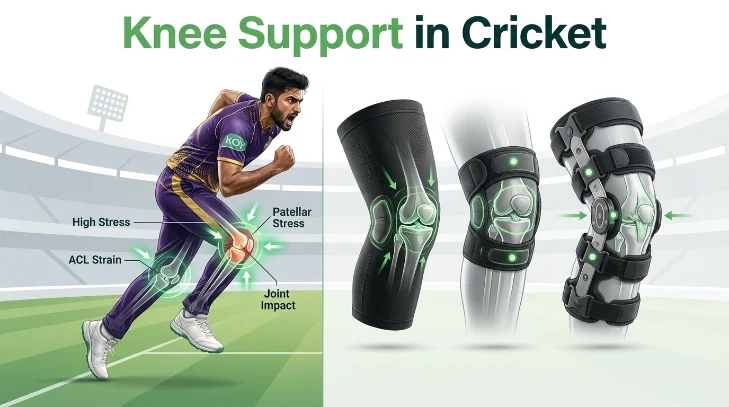

Knee support in cricket refers to braces, sleeves, and straps designed to protect and stabilise the knee joint during batting, bowling, and fielding. Cricket places immense stress on knees through repetitive sprinting, sudden direction changes, and high-impact landings. Wearing appropriate knee support helps prevent common injuries like patellar tendinopathy, ligament sprains, and meniscus tears while providing compression and proprioceptive feedback for enhanced joint awareness.
For cricketers experiencing knee pain or recovering from injury, choosing the right level of support from lightweight compression sleeves to rigid hinged braces — is essential for safe participation and optimal performance on the field.
Every cricketer knows the feeling: you’re sprinting between wickets, diving to stop a boundary, or landing after a delivery, and your knee sends a warning signal. Knee support in cricket has evolved from a reactive measure for injured players to a proactive tool for performance and longevity.
The modern game is faster than ever. Fast bowlers generate forces up to eight times their body weight through their front knee. Batters pivot explosively. Fielders cover ground with sharp changes of direction. These repetitive, high-impact movements make the knee joint one of the most vulnerable areas in cricket.
Whether you’re a seasoned professional or a weekend warrior, understanding knee support options can be the difference between a long career and a sidelined season. This guide covers everything from the types of supports available to how to choose the right one for your specific needs.
Why Cricket Puts Knees at Risk
- The biomechanical demands of batting, bowling, and fielding
- Common knee injuries in cricket: patellar tendinopathy, ACL/MCL sprains, meniscus tears, patellofemoral pain
- Statistics on cricket-related knee injuries
Types of Knee Support for Cricket
- Compression Sleeves: Lightweight support for mild pain and swelling
- Knee Straps: Targeted compression for patellar tendon issues
- Hinged Braces: Maximum stability for ligament injuries
- Cricket Pad Splints: Immobilisation for severe injuries
Benefits of Wearing Knee Support in Cricket
- Injury prevention through enhanced stability
- Pain reduction and swelling management
- Improved proprioception (joint position awareness)
- Confidence and peace of mind during play
Choosing the Right Knee Support
- Assessing your injury or condition
- Matching support level to activity intensity
- Material considerations: breathability, moisture-wicking, durability
- Fit and sizing guide
Best Knee Braces for Cricket (Product Comparisons)
- Bauerfeind GenuTrain: All-round support for pain relief
- Bauerfeind GenuTrain P3: Patellar tracking and alignment
- Bauerfeind Sports Knee Support: Lightweight protection
- FUTURO Premium Compression Knee Sleeve: Mild support with stabilisers
How to Wear and Maintain Knee Support
- Proper application techniques
- Wearing duration guidelines
- Cleaning and care instructions
Preventing Knee Injuries in Cricket
- Strengthening exercises (quadriceps, hamstrings, glutes)
- Flexibility and mobility work
- Proper bowling and fielding technique
ICC Rules and Regulations
- Are knee supports allowed in professional cricket?
- Restrictions on rigid or metal components
Common Mistakes to Avoid
- Wearing the wrong level of support
- Using neoprene for high-intensity cricket
- Over-reliance on support without addressing underlying issues
Knee Support Types for Cricket
| Support Type | Support Level | Best For | Key Features |
| Compression Sleeve | Level 1 (Mild) | Mild pain, swelling, arthritis | 4-way stretch, moisture-wicking, lightweight |
| Knee Strap | Level 2 (Moderate) | Patellar tendinopathy, jumper’s knee | Targeted compression, adjustable, minimal bulk |
| Hinged Brace | Level 3 (Maximum) | Ligament injuries, post-surgery | Metal stays, flexion control, maximum stability |
| Cricket Pad Splint | Immobilisation | Patella fractures, severe trauma | Rigid panels, full extension, Velcro straps |
Recommended Knee Braces for Cricket
| Product | Support Level | Primary Use | Price Range |
| Bauerfeind GenuTrain | Moderate | Pain relief, stability, meniscus support | $$ |
| Bauerfeind GenuTrain P3 | Moderate-High | Patellar tracking, ACL/MCL support | $$$ |
| Bauerfeind Sports Knee Support | Mild-Moderate | Protection during activity | $$ |
| FUTURO Premium Compression Sleeve | Mild | Arthritis, swelling, sprains | $ |
FAQs
1. Why do cricketers need knee support?
Cricket involves repetitive sprinting, sudden direction changes, and high-impact landing forces that stress the knee joint. Knee support provides compression, stability, and proprioceptive feedback to reduce injury risk and manage existing pain.
2. What type of knee brace is best for cricket?
The best brace depends on your condition. Compression sleeves work for mild pain, knee straps target patellar tendon issues, and hinged braces provide maximum support for ligament injuries. Bauerfeind GenuTrain is widely recommended for all-round cricket use.
3. Can you wear a knee brace while playing cricket?
Yes, most knee braces are designed for sports activity. However, braces with rigid metal parts may not be allowed in professional matches. Always check with your governing body’s equipment regulations.
4. How do I choose the right knee support for cricket?
Assess your injury severity, activity level, and comfort needs. Level 1 supports suit mild pain, Level 2 for active sports with moderate issues, and Level 3 for serious ligament injuries. Consult a physiotherapist for personalised advice.
5. Is neoprene knee support good for cricket?
Neoprene offers limited support and doesn’t wick moisture well, making it uncomfortable during intense cricket activity. Medical-grade compression fabrics with 3D weaves are more effective and durable.
6. How should a knee support fit?
It should be snug but not restrictive, with no bunching or slippage. Measure your thigh circumference above the knee for accurate sizing. The patella should sit comfortably in any designated opening.
7. Can knee support prevent cricket injuries?
Research shows knee supports enhance stability and proprioception, reducing the risk of both acute and chronic cricket injuries. However, they work best alongside proper strengthening, technique, and conditioning.
8. How long can I wear a knee brace during cricket?
Functional supports can be worn during play and activity. Rehabilitative braces may need to be worn all waking hours except when sleeping. Follow your healthcare provider’s guidance.
9. What are the common cricket knee injuries?
Common injuries include patellar tendinopathy (jumper’s knee), ACL and MCL sprains, meniscus tears, and patellofemoral pain syndrome. Fast bowlers and fielders are particularly susceptible due to high-impact loading.
10. Does ICC allow knee supports in matches?
The ICC generally allows knee supports for medical reasons, but braces with exposed metal or rigid components may be restricted. Players should seek approval from match officials before using any supportive equipment.
Conclusion
Knee support in cricket is far more than a piece of equipment it’s an investment in your playing future. The demands of modern cricket, from the explosive power of fast bowling to the agility required in the field, place extraordinary stress on the knee joint. Ignoring early warning signs or playing through pain rarely ends well.
The right knee support provides compression, stability, and the proprioceptive feedback that helps your body protect itself. Whether you opt for a lightweight compression sleeve, a targeted patellar strap, or a robust hinged brace, the key is matching the support level to your specific needs.
But remember: knee support is not a substitute for strength, conditioning, and good technique. The most effective approach combines appropriate bracing with targeted exercises for the quadriceps, hamstrings, and glutes, alongside proper bowling and fielding mechanics.
Consult a sports physiotherapist for personalised advice. Your knees carry you through every run, every delivery, and every dive. Protect them well, and they’ll serve you for seasons to come.