
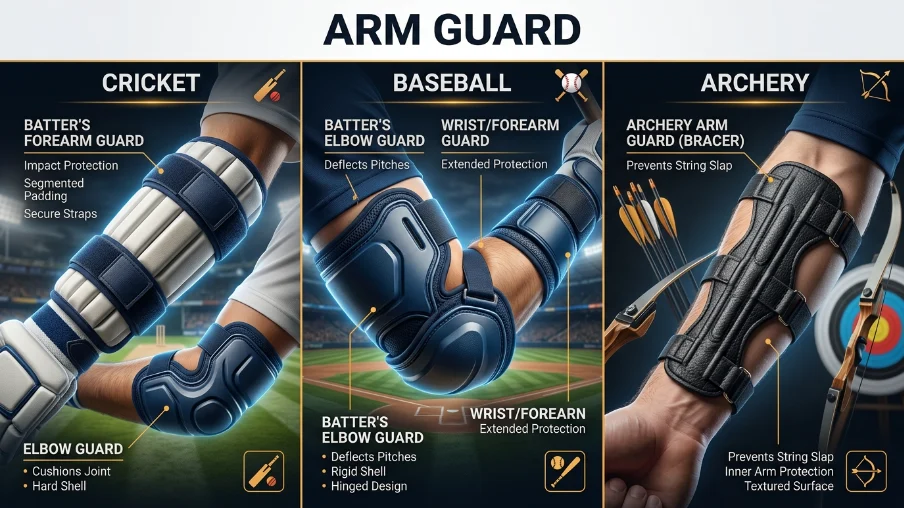

An arm guard is protective sports gear worn on the forearm or elbow to absorb impact and prevent injuries, commonly used in cricket, baseball, and archery for safety and performance.
In fast-paced sports, even a split-second impact can lead to serious injury. That’s where an arm guard becomes essential. Whether you’re facing a 140 km/h cricket delivery or practicing archery, protecting your forearm isn’t optional it’s smart.
An arm guard isn’t just about safety. It boosts confidence, lets you focus on performance, and reduces hesitation. From beginners to professionals, this simple piece of equipment plays a critical role across multiple sports.
Let’s break down everything you need to know from types and materials to choosing the perfect one.
WHAT IS AN ARM GUARD?
An arm guard is a protective device worn on the forearm or elbow to shield against impact, friction, or injury.
It is commonly used in:
- Cricket (batting protection)
- Baseball (elbow protection)
- Archery (string slap protection)
- Martial arts (impact defense)
WHY AN ARM GUARD IS IMPORTANT
1. Injury Prevention
Fast balls or accidental hits can cause bruises or fractures. An arm guard absorbs shock.
2. Confidence Boost
Players perform better when they feel protected.
3. Better Focus
No fear of injury means full concentration on technique.
4. Essential for Beginners
New players often mistime shots making protection even more important.
TYPES OF ARM GUARDS
1. Cricket Arm Guard
- Covers forearm and elbow
- Lightweight with padding
- Designed for fast bowling impact
2. Baseball Elbow Guard
- Focused on elbow joint
- Hard outer shell
- Used by batters
3. Archery Arm Guard
- Slim and lightweight
- Prevents string slap
- Made from leather or synthetic material
4. Multi-Sport Arm Guard
- Flexible design
- Used in training or recreational sports
ARM GUARD VS ELBOW GUARD
| Feature | Arm Guard | Elbow Guard |
| Coverage | Forearm + elbow | Only elbow |
| Usage | Cricket, archery | Baseball, cricket |
| Flexibility | Moderate | High |
| Protection Level | Broad protection | Targeted protection |
MATERIALS USED IN ARM GUARDS
Different materials offer different levels of protection:
| Material | Benefits | Best For |
| Foam Padding | Lightweight, shock absorption | Beginners |
| High-Density EVA | Strong impact resistance | Intermediate players |
| Plastic Shell | Maximum protection | Professionals |
| Leather | Durable and flexible | Archery |
HOW TO CHOOSE THE BEST ARM GUARD
1. Fit and Comfort
- Should fit snugly but not restrict movement
- Adjustable straps are ideal
2. Level of Protection
- Beginners: Basic foam padding
- Advanced players: Reinforced guards
3. Sport-Specific Design
- Choose based on your sport
- Cricket and baseball designs differ significantly
4. Weight
- Lightweight guards improve mobility
5. Breathability
- Look for ventilation to avoid sweating
HOW TO WEAR AN ARM GUARD PROPERLY
- Place it over your forearm or elbow
- Align padding with impact area
- Secure straps firmly
- Ensure full range of motion
- Test with practice movements
COMMON MISTAKES TO AVOID
- Wearing it too loose
- Choosing wrong size
- Ignoring sport-specific design
- Using damaged or worn-out guards
- Overlooking comfort for protection
MAINTENANCE AND CARE
- Clean regularly with a damp cloth
- Air dry after use
- Avoid direct sunlight exposure
- Store in a cool, dry place
FAQs
1. What is an arm guard used for?
An arm guard protects the forearm and elbow from impact injuries during sports. It absorbs shock from fast balls, equipment, or accidental hits, making it essential for safety and confidence during play.
2. Is an arm guard necessary in cricket?
Yes, especially against fast bowlers. It protects against painful impacts and reduces injury risk, allowing players to focus on batting without fear.
3. What is the difference between arm guard and elbow guard?
An arm guard covers both forearm and elbow, while an elbow guard focuses only on the elbow joint, offering more targeted protection.
4. Can beginners use an arm guard?
Absolutely. Beginners benefit the most because they are more likely to mistime shots and face accidental impacts.
5. How tight should an arm guard be?
It should be snug but comfortable. Too tight restricts movement, while too loose reduces protection.
6. Which material is best for arm guards?
High-density foam or EVA is ideal for most players, while professionals may prefer guards with hard outer shells for maximum protection.
7. Can I use the same arm guard for different sports?
Not always. Different sports require different designs, so it’s better to use sport-specific arm guards.
8. How long does an arm guard last?
With proper care, it can last 1–3 years depending on usage frequency and quality.
9. Do professionals use arm guards?
Yes, most professional athletes use arm guards, especially in cricket and baseball, for safety and performance.
10. How do I know the right size?
Check manufacturer sizing charts and ensure the guard fits snugly without restricting movement.
CONCLUSION
An arm guard might seem like a small piece of equipment, but its impact is huge. It protects you from injuries, boosts confidence, and allows you to play freely. Whether you’re a beginner stepping onto the field for the first time or a seasoned athlete facing high-speed challenges, the right arm guard can make a noticeable difference.
Choosing the correct type, material, and fit ensures maximum protection without compromising comfort. As sports continue to evolve, safety gear like arm guards has become more advanced, lightweight, and efficient.
If you’re serious about performance and longevity in sports, investing in a high-quality arm guard isn’t optional it’s essential.