
A cricket helmet is protective headgear worn by batters and close fielders to prevent head injuries from fast balls, featuring a hard shell, face grille, and cushioning for safety and comfort.
Cricket has evolved into a faster and more aggressive sport, making safety equipment more important than ever. A cricket helmet is now an essential part of modern cricket, protecting players from high-speed deliveries that can cause serious injury.
From professional matches to street cricket, helmets are widely used by batters and close-in fielders. But not all helmets are the same. Understanding their design, safety features, and proper fit can make a huge difference in both protection and performance.
WHAT IS A CRICKET HELMET?
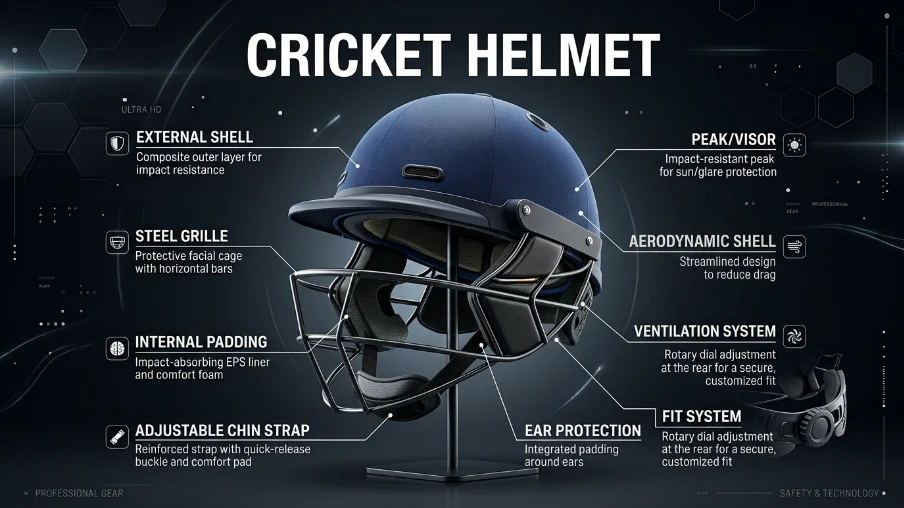
A cricket helmet is a specialized piece of protective gear designed to shield the head, face, and sometimes neck from impact.
It typically includes:
- Outer shell – Hard protective layer
- Inner padding – Absorbs shock
- Face grille/visor – Protects face from ball impact
- Chin strap – Keeps helmet secure
WHY CRICKET HELMETS ARE IMPORTANT
Cricket balls can travel at speeds exceeding 150 km/h (93 mph). Without proper protection, even a single impact can cause severe injuries.
Key Benefits
- Prevents head injuries
- Reduces risk of concussions
- Protects face and jaw
- Boosts player confidence
TYPES OF CRICKET HELMETS
1. Traditional Helmet
- Classic design with metal grille
- Strong and durable
- Widely used at all levels
2. Modern Lightweight Helmet
- Made with advanced materials
- Better ventilation
- More comfortable for long innings
3. Helmet with Neck Guard
- Extra protection for the back of the neck
- Recommended after safety upgrades in recent years
MATERIALS USED IN CRICKET HELMETS
| Component | Material Used | Purpose |
| Outer Shell | ABS Plastic / Fiberglass | Impact resistance |
| Inner Padding | Foam | Shock absorption |
| Grille | Steel / Titanium | Face protection |
| Strap | Nylon / Elastic | Secure fitting |
CRICKET HELMET SAFETY STANDARDS
Modern helmets must meet strict safety regulations.
Key Standards
- Impact resistance testing
- Ball penetration resistance
- Grille gap safety
- Certification by cricket boards
Important: Always choose helmets that meet official safety standards.
HOW TO CHOOSE THE RIGHT CRICKET HELMET
Choosing the right helmet is crucial for safety and comfort.
1. Size and Fit
- Should fit snugly, not tight
- No movement when you shake your head
2. Comfort
- Lightweight design
- Adequate padding
3. Visibility
- Clear view through grille
- Proper alignment with eyes
4. Ventilation
- Air vents for cooling
5. Safety Features
- Neck guard recommended
- Strong grille attachment
CRICKET HELMET SIZE GUIDE
| Head Circumference | Size |
| 52–54 cm | Small |
| 55–58 cm | Medium |
| 59–62 cm | Large |
COMMON MISTAKES WHEN USING A CRICKET HELMET
- Wearing a loose helmet
- Ignoring safety certifications
- Using damaged helmets
- Not adjusting the grille properly
CRICKET HELMET MAINTENANCE
To ensure long-lasting protection:
- Clean regularly with a damp cloth
- Check for cracks or damage
- Replace worn-out padding
- Store in a dry place
PROFESSIONAL PLAYERS AND HELMET USAGE
Modern cricketers rarely play without helmets, especially against fast bowlers. The introduction of improved safety designs has made helmets standard equipment in international cricket.
FAQs
1. Why is a cricket helmet important?
A cricket helmet protects players from high-speed ball impacts that can cause serious head injuries. It reduces the risk of concussions and facial damage, making it essential for safety in modern cricket at all levels.
2. Are cricket helmets mandatory?
In professional cricket, helmets are strongly recommended and often mandatory for batters and close fielders. While not always required in casual play, wearing one significantly improves safety.
3. What is the best cricket helmet material?
High-quality cricket helmets use ABS plastic or fiberglass for the outer shell and steel or titanium for the grille. These materials provide strong impact resistance and durability.
4. How should a cricket helmet fit?
A cricket helmet should fit snugly without being too tight. It should not move when you shake your head, and the grille should align properly with your face.
5. What is a neck guard in a cricket helmet?
A neck guard is an additional protective feature attached to the back of the helmet. It protects the neck area from short-pitched deliveries and unexpected bounces.
6. Can wicketkeepers wear helmets?
Yes, wicketkeepers often wear helmets when standing close to the stumps, especially against fast bowlers, to protect against edges and deflections.
7. How often should you replace a cricket helmet?
You should replace a cricket helmet if it shows signs of damage, cracks, or worn padding. Even without visible damage, replacing it every few years is recommended.
8. Are expensive cricket helmets better?
Generally, higher-priced helmets offer better materials, improved comfort, and enhanced safety features. However, the most important factor is meeting safety standards.
9. What size cricket helmet do I need?
Helmet size depends on your head circumference. Measure your head and refer to the manufacturer’s size chart to ensure a proper fit.
10. Do beginners need a cricket helmet?
Yes, beginners should wear a cricket helmet to protect themselves while learning. It builds confidence and ensures safety, especially against fast bowling.
CONCLUSION
A cricket helmet is more than just equipment it’s a critical safety tool that protects players from serious injuries. With the increasing speed and intensity of modern cricket, wearing a high-quality helmet is no longer optional.
Choosing the right helmet involves understanding fit, materials, and safety standards. Whether you’re a beginner or a professional, investing in proper head protection ensures not only safety but also confidence on the field. As cricket continues to evolve, helmets will remain a vital part of the game, combining innovation, comfort, and maximum protection.