


M A Chidambaram Stadium, also known as Chepauk Stadium in Chennai, is a historic cricket venue known for spin-friendly pitches, a capacity of around 38,000, and as the home ground of Chennai Super Kings.
Cricket stadiums often define the character of a match, and m a chidambaram stadium is one of the most iconic venues in the world. Located in Chennai, this ground has witnessed legendary matches, unforgettable performances, and intense IPL battles.
From its unique pitch behavior to its passionate crowd, Chepauk isn’t just a stadium it’s an experience. Whether you’re a cricket fan, analyst, or fantasy player, understanding this venue gives you a serious edge.
Overview of M. A. Chidambaram Stadium

The M. A. Chidambaram Stadium, popularly called Chepauk Stadium, is one of India’s oldest cricket grounds.
- Location: Chennai, Tamil Nadu, India
- Established: 1916
- Operator: Tamil Nadu Cricket Association (TNCA)
- Home Team: Chennai Super Kings (IPL)
It has hosted Test matches, ODIs, T20Is, and IPL games, making it a multi-format venue with rich history.
Stadium Capacity and Infrastructure
Key Details
| Feature | Details |
| Seating Capacity | ~38,000 |
| Ends | Anna Pavilion End, V. Pattabhiraman Gate End |
| Floodlights | Yes |
| Renovation | Major upgrades before IPL 2011 & 2023 |
The stadium blends modern facilities with historic charm, offering a loud and energetic atmosphere.
Pitch Report: Chepauk Stadium
The pitch at Chepauk is one of the most discussed in cricket.
Pitch Characteristics
- Dry surface
- Slow bounce
- Assists spinners heavily
- Becomes slower as match progresses
Match Behavior
| Format | Pitch Nature |
| Test | Spin dominates from Day 3 |
| ODI | Balanced, slows down later |
| T20/IPL | Spin-friendly, low scoring |
Key Insight
“If you can play spin well, Chepauk becomes your playground.”
Batting vs Bowling: Who Gets Advantage?
Batting
- Easy early on
- Difficult in second innings
Bowling
- Spinners dominate
- Pacers rely on cutters
Strategy Tip
- Teams prefer batting first in T20s
- Chasing becomes harder due to pitch slowdown
Historic Matches at Chepauk
This stadium has seen some unforgettable moments:
- India vs Australia Test (2001 era dominance)
- Tied Test between India and Australia (1986)
- IPL finals featuring Chennai Super Kings
These matches helped shape Chepauk’s legendary status.
IPL Records at M. A. Chidambaram Stadium
Key IPL Stats
| Record Type | Record |
| Highest Team Score | 246+ |
| Lowest Team Score | ~70 |
| Best Bowling | 5+ wickets |
| Most Runs | CSK players dominate |
| Most Wickets | Spinners lead charts |
Why CSK Dominates Here
- Familiarity with pitch
- Strong spin attack
- Tactical batting approach
Boundary Dimensions
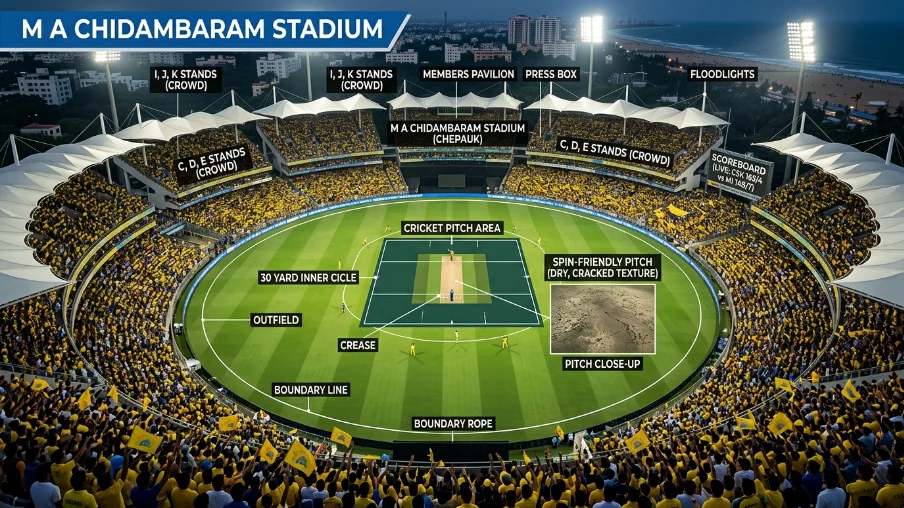
- Straight boundaries: Medium
- Square boundaries: Slightly shorter
- Overall: Balanced but favors smart shot selection
Power hitters must adjust due to slower pitch.
Facilities and Fan Experience
Chepauk offers:
- Modern seating upgrades
- Improved drainage system
- Loud and passionate crowd
- Coastal weather influence
The atmosphere is considered one of the best in cricket.
Weather Conditions
Chennai’s weather plays a big role:
- Hot and humid climate
- Dew factor in night matches
- Slows pitch further
This impacts both player stamina and match strategy.
Why Chepauk is Unique
- Oldest cricket heritage in India
- Spin-friendly pitch unlike most modern grounds
- Loyal fan base
- Tactical gameplay required
It’s not just about power it’s about skill and patience.
FAQs
1. What is the capacity of M A Chidambaram Stadium?
The stadium has a seating capacity of around 38,000 spectators. After renovations, it offers improved seating, better facilities, and enhanced fan experience while maintaining its historic charm.
2. Is Chepauk pitch batting-friendly or bowling-friendly?
Chepauk is generally bowling-friendly, especially for spinners. While batting is easier early in the match, the pitch slows down later, making stroke play more difficult.
3. Which IPL team plays at Chepauk Stadium?
Chennai Super Kings use this stadium as their home ground. They have a strong record here due to their familiarity with conditions and spin-heavy squad.
4. Why is Chepauk pitch slow?
The dry surface and natural soil composition make the pitch slow. Over time, it breaks down further, offering more grip and turn for spinners.
5. What is the highest score at Chepauk Stadium?
The highest scores at Chepauk have crossed 240 runs in IPL matches, though such totals are rare due to pitch conditions.
6. When was M A Chidambaram Stadium built?
The stadium was established in 1916, making it one of the oldest cricket venues in India with a rich historical legacy.
7. Does dew affect matches at Chepauk?
Yes, dew can impact night matches, making the ball skid and slightly helping batters in the second innings.
8. What type of bowlers succeed at Chepauk?
Spinners dominate here. Bowlers with variations like slower balls and cutters also perform well.
9. Why do teams prefer batting first at Chepauk?
The pitch slows down over time, making chasing difficult. Batting first allows teams to take advantage of better conditions early.
10. Is Chepauk good for high-scoring matches?
Not usually. It is known for moderate or low-scoring games where strategy and spin play a key role.
Conclusion
M A Chidambaram Stadium stands as one of cricket’s most iconic venues, blending history, strategy, and atmosphere into a unique experience. Unlike modern high-scoring grounds, Chepauk challenges players with its slow, spin-friendly surface, making every run hard-earned. Over the years, it has hosted legendary matches and continues to be the fortress of Chennai Super Kings. Understanding this stadium isn’t just useful it’s essential for fans, analysts, and fantasy players alike. Whether it’s the roaring crowd, tactical battles, or historic legacy, Chepauk remains a cornerstone of world cricket. As the game evolves, this stadium continues to remind everyone that skill, patience, and adaptability still define greatness.