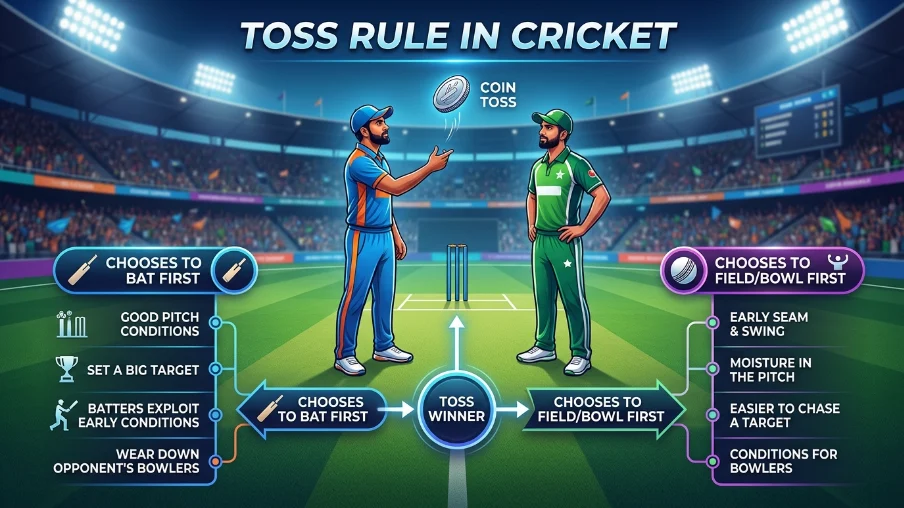
The toss rule in cricket determines which team bats or bowls first. Before the match, captains flip a coin, and the winner chooses their preferred option based on pitch and…
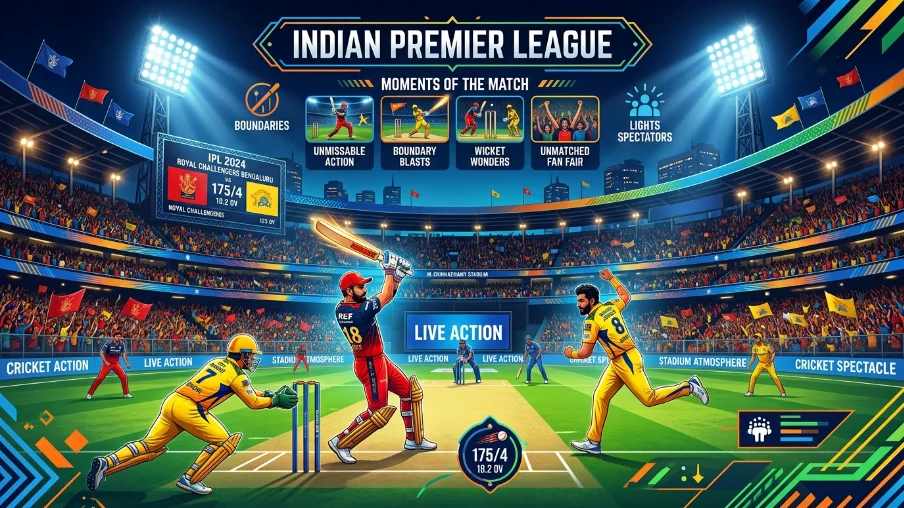
The Indian Premier League (IPL) is a professional T20 cricket league in India featuring franchise teams, global players, and fast-paced matches, making it one of the most popular and valuable…
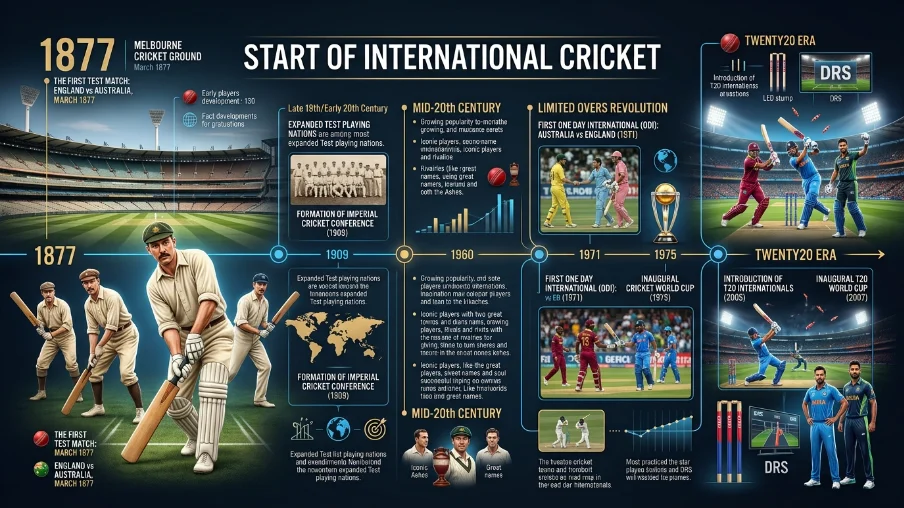
The start of international cricket dates back to 1877 when England and Australia played the first official Test match at the Melbourne Cricket Ground, marking the beginning of organized international…
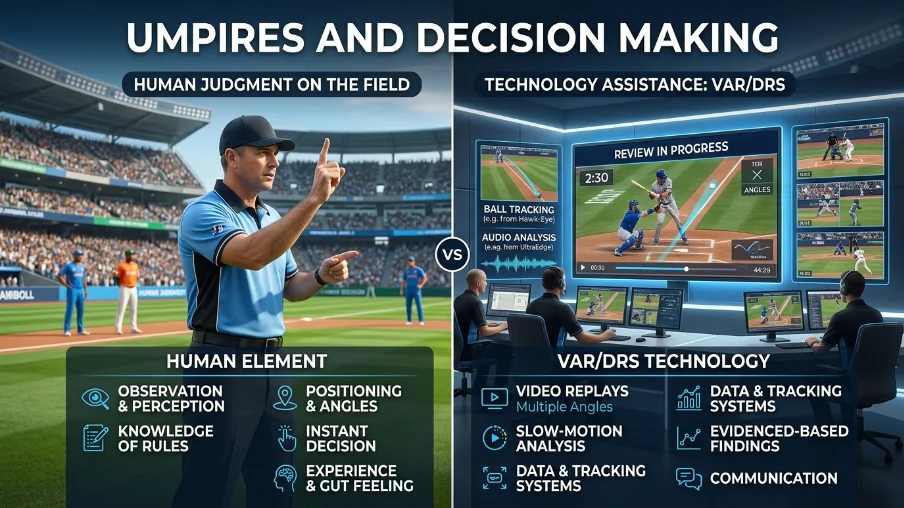
Umpires and decision making involve applying game rules, observing play in real time, and using technology like VAR or DRS to ensure accurate, fair outcomes during matches. In every sport,…
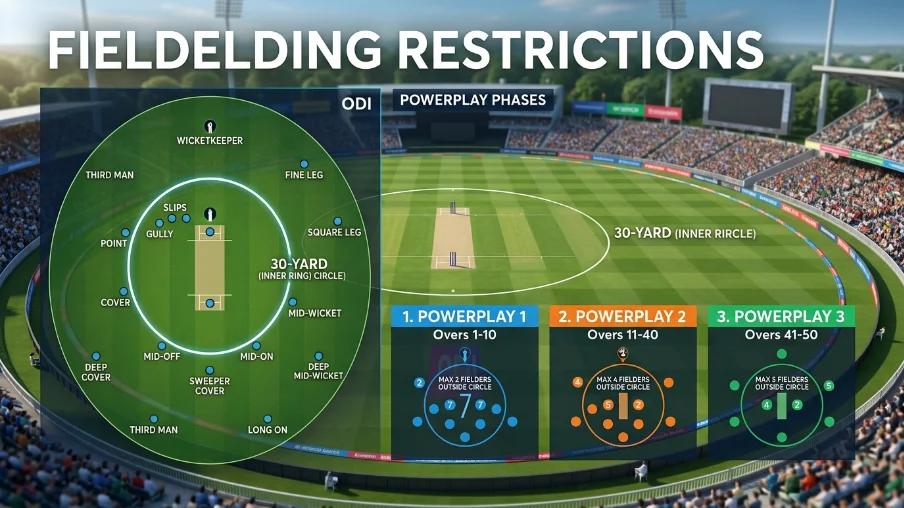
Fielding restrictions in cricket limit how many fielders can stand outside the 30-yard circle during specific overs, known as powerplays, to encourage attacking play and higher scoring in limited-overs formats.…
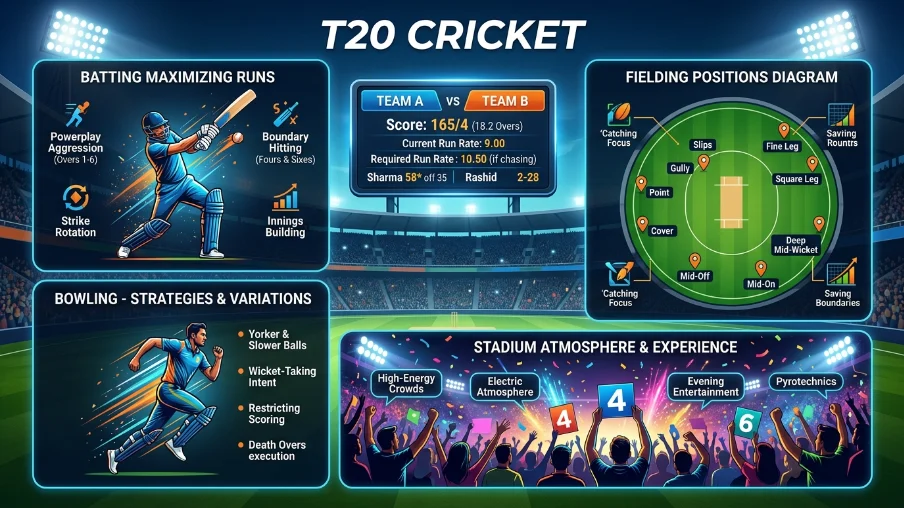
T20 cricket is a fast-paced format where each team plays 20 overs, focusing on aggressive batting, quick scoring, and shorter match duration, typically lasting about three hours. Cricket has evolved…
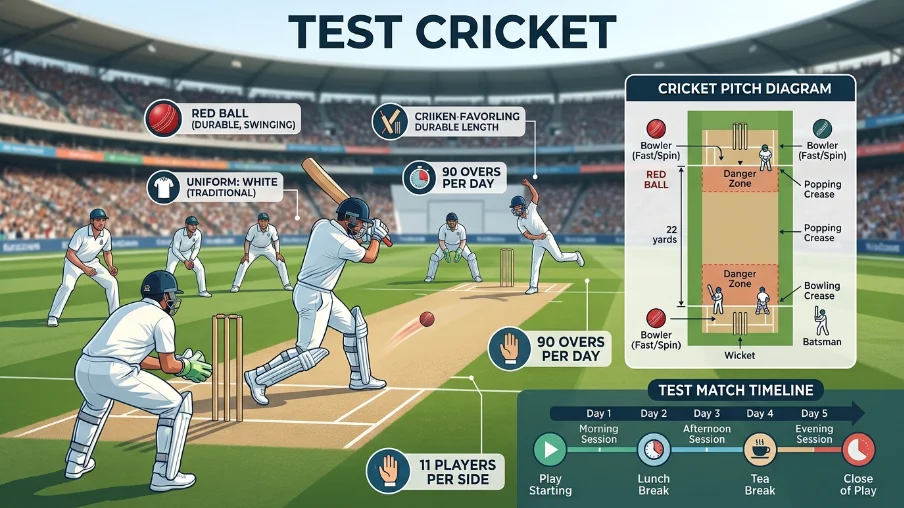
Test cricket is the longest and most traditional format of cricket, played over five days with two innings per team. It tests players’ skill, endurance, and strategy, making it the…
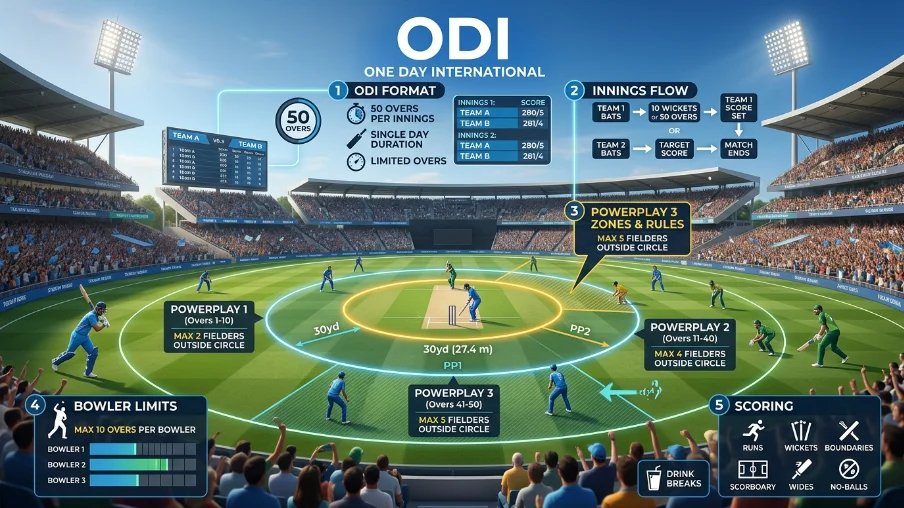
ODI One Day International is a 50-over cricket format where each team bats once, aiming to score the highest runs. It’s a limited-overs international match governed by ICC rules and…
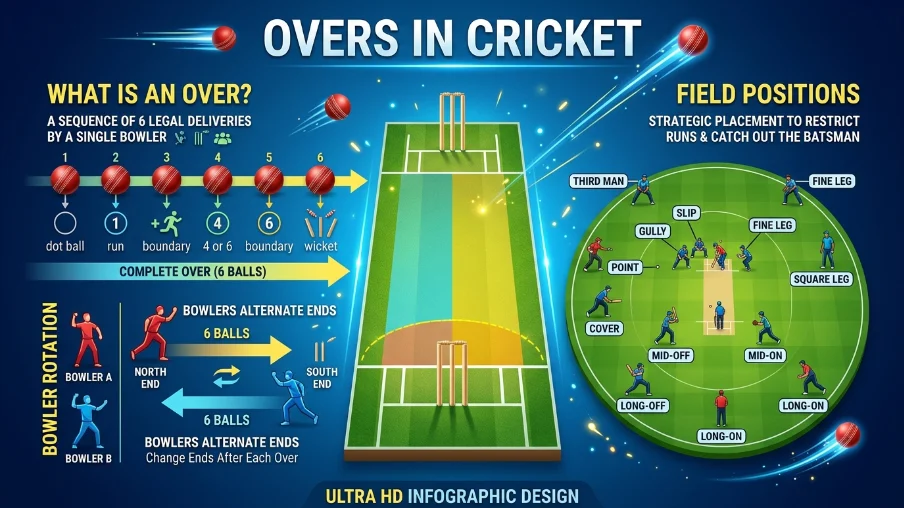
An over in cricket consists of six legal deliveries bowled by one bowler. After completing an over, another bowler takes over from the opposite end, forming the basic structure of…
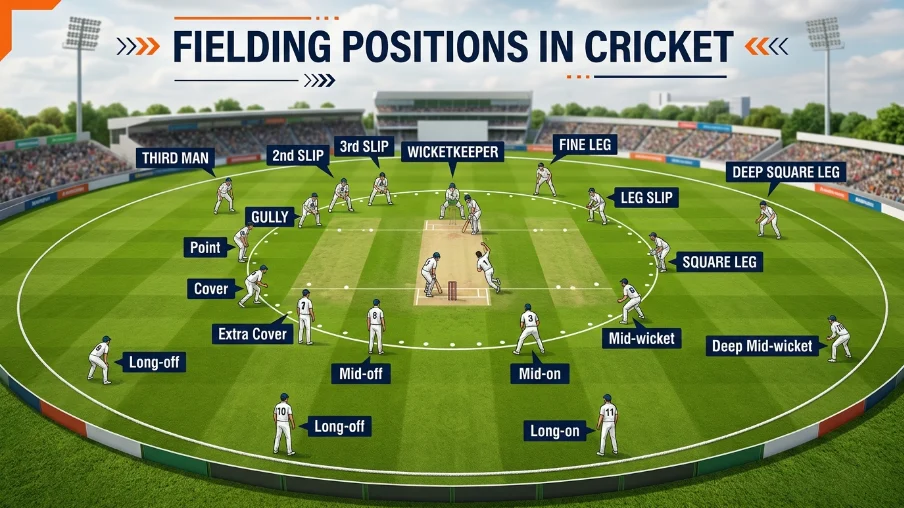
Fielding positions in cricket refer to the specific spots where players stand on the field to stop runs, take catches, and support the bowler. These positions are divided into off…