
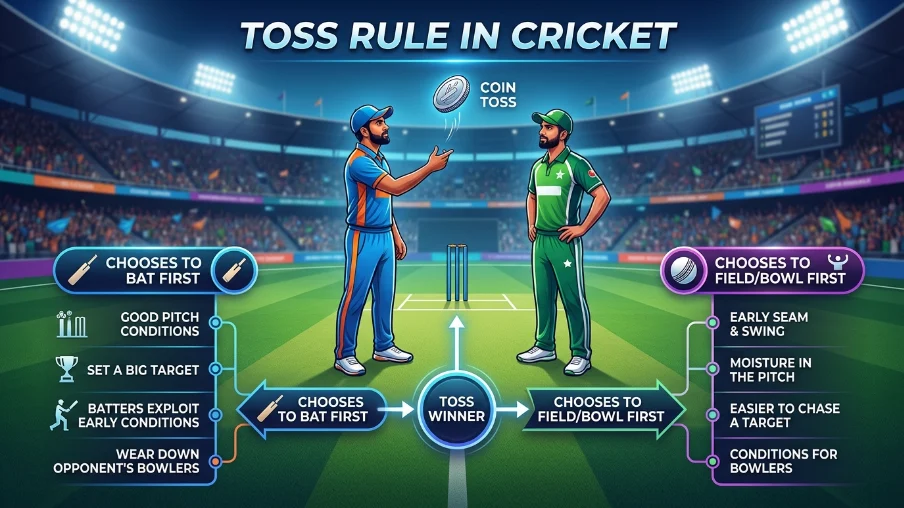

The toss rule in cricket determines which team bats or bowls first. Before the match, captains flip a coin, and the winner chooses their preferred option based on pitch and weather conditions.
The toss rule in cricket might seem simple, but it plays a crucial role in shaping the outcome of a match. A single coin flip can influence strategy, momentum, and even the final result.
From international Test matches to fast-paced T20 games, the toss is the very first contest between two teams. Captains carefully study pitch conditions, weather, and team strengths before making their decision.
In this guide, you’ll learn exactly how the toss works, why it matters, and how it can impact the game at every level.
What Is the Toss Rule in Cricket?
The toss is a pre-match procedure where the two captains meet in the presence of match officials. A coin is flipped, and one captain calls heads or tails.
- If the call is correct → that team wins the toss
- If incorrect → the other team wins
The winning captain then decides:
- Bat first
- Bowl (field) first
Official Toss Procedure (Step-by-Step)
Here’s how the toss rule in cricket works officially:
- Captains arrive at the pitch before the match
- Match referee or umpire supervises
- Coin is flipped
- One captain calls the outcome
- Result is confirmed
- Winning captain chooses batting or bowling
Who Calls the Toss in Cricket?
The visiting team captain usually calls the toss. This tradition ensures fairness since the home team already has familiarity with conditions.
What Happens After Winning the Toss?
Once a team wins the toss, they must immediately decide:
- Bat first → set a target
- Bowl first → chase later
This decision depends on several factors.
Factors That Influence Toss Decisions
1. Pitch Conditions
- Dry pitch → good for batting
- Green pitch → favors bowlers
2. Weather Conditions
- Cloudy → helps swing bowling
- Sunny → ideal for batting
3. Match Format
- Test → batting first preferred
- T20 → chasing often easier
4. Team Strength
- Strong batting lineup → bat first
- Strong bowling attack → bowl first
Toss Rules Across Different Formats
| Format | Toss Importance | Common Decision |
|---|---|---|
| Test Cricket | Very High | Bat first |
| ODI | Moderate | Depends on pitch |
| T20 | High | Bowl first |
Why the Toss Is Important in Cricket
The toss can significantly impact the match outcome.
Key Reasons:
- Determines match strategy
- Affects pitch usage
- Influences pressure on teams
- Impacts chasing advantage
Example:
In T20 matches, teams often prefer chasing due to scoreboard clarity.
Can Toss Decide a Match?
Not always but it can provide a strong advantage.
Situations Where Toss Matters Most:
- Dew factor in night matches
- Worn-out pitch in Test matches
- Swing-friendly conditions early on
Common Mistakes in Toss Decisions
- Ignoring pitch report
- Choosing based on habit, not conditions
- Underestimating weather impact
- Not considering team strengths
Interesting Facts About Cricket Toss
- Toss has been part of cricket since the 19th century
- Some captains have lost multiple tosses in a row
- Winning toss doesn’t guarantee victory
- Data shows slight advantage in certain formats
Strategic Importance of Toss (Modern Cricket)
Modern cricket uses analytics to guide toss decisions.
Teams Analyze:
- Win percentage batting vs chasing
- Venue history
- Player performance trends
Toss Controversies in Cricket
There have been rare controversies:
- Delayed toss due to weather
- Pitch inspection disputes
- Claims of unfair advantage
However, official rules ensure transparency.
TABLES
Toss Decision Impact (Example Data)
| Scenario | Preferred Choice | Reason |
|---|---|---|
| Dew in evening | Bowl first | Easier batting later |
| Cracked pitch | Bat first | Pitch worsens |
| Green surface | Bowl first | Helps fast bowlers |
| Flat pitch | Bat first | Big score advantage |
FAQs
1. What is the toss rule in cricket?
The toss rule in cricket determines which team bats or bowls first. Captains flip a coin before the match, and the winner chooses their preferred option based on pitch, weather, and team strategy.
2. Who calls the toss in cricket?
The visiting team captain usually calls the toss. This tradition ensures fairness, as the home team already has familiarity with the pitch and local conditions.
3. Why is toss important in cricket?
The toss is important because it allows a team to choose conditions that suit their strengths. It can influence strategy, especially in formats like T20 where chasing is often easier.
4. What happens if a team wins the toss?
If a team wins the toss, the captain decides whether to bat or bowl first. This decision must be made immediately after the toss result is confirmed.
5. Does winning the toss guarantee victory?
No, winning the toss does not guarantee victory. While it provides an advantage, match performance, skills, and execution are far more important.
6. Can toss be delayed in cricket?
Yes, the toss can be delayed due to weather conditions or pitch inspections. However, it must take place before the match officially begins.
7. What is the best decision after winning the toss?
There is no fixed best decision. It depends on pitch conditions, weather, and match format. For example, batting first is common in Tests, while chasing is popular in T20.
8. Is toss more important in T20 or Test cricket?
The toss is important in both, but for different reasons. In Tests, pitch deterioration matters, while in T20, chasing advantage and dew play a major role.
9. Who supervises the toss?
The toss is supervised by match officials, usually the umpire or match referee, to ensure fairness and adherence to rules.
10. Can technology replace toss in cricket?
There have been discussions about alternatives, but the traditional coin toss remains standard. It is simple, transparent, and widely accepted.
CONCLUSION
The toss rule in cricket may look like a simple coin flip, but its impact goes far beyond chance. It sets the tone for the entire match, influences strategy, and can provide a crucial advantage when used wisely.
Captains today rely on data, pitch reports, and experience to make the right call after winning the toss. While it doesn’t guarantee victory, it often shapes the direction of the game especially in formats like T20 and Test cricket.
Understanding how the toss works helps you appreciate the deeper strategy behind cricket. The next time you watch a match, pay close attention to that small moment before the game begins it might just decide everything that follows.