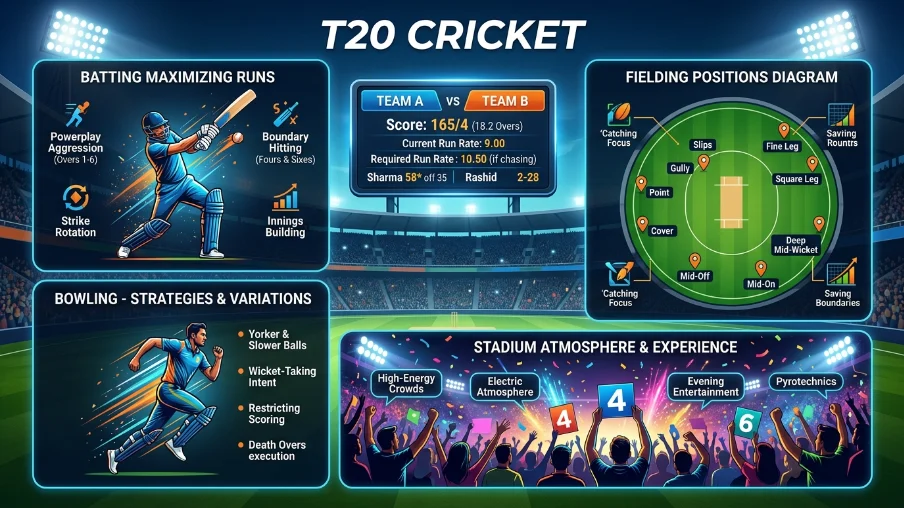

T20 cricket is a fast-paced format where each team plays 20 overs, focusing on aggressive batting, quick scoring, and shorter match duration, typically lasting about three hours.
Cricket has evolved dramatically over the years, but nothing has transformed the game quite like t20 cricket. Designed for speed, excitement, and entertainment, this format has brought millions of new fans into the sport worldwide.
Unlike traditional formats that can last days, T20 matches deliver results in just a few hours. That means more action, more boundaries, and constant pressure on players. Whether you’re a beginner or a long-time fan, understanding how T20 works helps you appreciate why it dominates modern cricket.
What Is T20 Cricket?
T20 cricket, also known as Twenty20, is the shortest official format of the game. Each team gets 20 overs (120 balls) to bat.
The goal is simple:
- Score as many runs as possible
- Restrict the opponent to a lower score
This format emphasizes:
- Aggressive batting
- Innovative shots
- Quick decision-making
History of T20 Cricket
T20 cricket began in 2003 in England to make the game more engaging.
Key Milestones
| Year | Event |
| 2003 | First T20 match (England) |
| 2007 | First ICC T20 World Cup |
| 2008 | Launch of IPL |
| 2020s | Global expansion of T20 leagues |
The format quickly gained popularity due to its entertainment value.
Basic Rules of T20 Cricket
Match Structure
- 2 teams, 11 players each
- Each team bats once
- 20 overs per innings
Key Rules
- Bowler can bowl max 4 overs
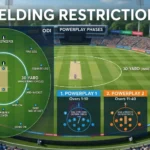
- Powerplay: first 6 overs with field restrictions
- Free hit after no-ball
- Super over decides tied matches
T20 Cricket Match Format Explained
A typical match follows this structure:
- Toss decides batting or bowling
- First innings (20 overs)
- Break (10–20 minutes)
- Second innings (20 overs)
- Result declared
Match Duration
- Around 3 hours total
Powerplay, Middle Overs & Death Overs
Powerplay (Overs 1–6)
- Only 2 fielders outside circle
- High scoring phase
Middle Overs (7–15)
- Strategy and rotation
- Build partnerships
Death Overs (16–20)
- Maximum hitting
- Highest run rate
T20 vs ODI vs Test Cricket
| Feature | T20 | ODI | Test |
| Overs | 20 | 50 | Unlimited |
| Duration | ~3 hours | ~8 hours | 5 days |
| Style | Aggressive | Balanced | Defensive |
| Popularity | Very High | High | Traditional |
Why T20 Cricket Is So Popular
1. Short Duration
Perfect for modern lifestyles.
2. Entertainment Factor
- Big hits
- Fast action
- Dramatic finishes
3. Global Leagues
- IPL
- PSL
- BBL
4. New Audience Appeal
Attracts younger fans.
Key Skills Required in T20 Cricket
Batting Skills
- Power hitting
- Strike rotation
- Innovation
Bowling Skills
- Yorkers
- Slower balls
- Variations
Fielding Skills
- Quick reflexes
- Direct hits
- Athletic catches
Major T20 Tournaments
- ICC T20 World Cup
- Indian Premier League (IPL)
- Pakistan Super League (PSL)
- Big Bash League (BBL)
These tournaments define global T20 success.
Important Statistics in T20 Cricket
| Metric | Description |
| Strike Rate | Runs per 100 balls |
| Economy Rate | Runs conceded per over |
| Run Rate | Runs per over |
| Boundary % | % of runs from boundaries |
Common Mistakes Beginners Make
- Thinking defense works like Test cricket
- Ignoring strike rate importance
- Underestimating powerplay
- Poor field placement understanding
FAQs
1. What is T20 cricket in simple terms?
T20 cricket is a short format where each team plays 20 overs. The aim is to score the highest runs quickly. Matches are fast-paced and usually finish within three hours, making them highly entertaining.
2. How many overs are in T20 cricket?
Each team plays exactly 20 overs in T20 cricket. That means 120 balls per innings, making it the shortest official format of international cricket.
3. How long does a T20 match last?
A T20 match typically lasts around three hours. This includes both innings and a short break in between, making it ideal for quick viewing.
4. Why is T20 cricket so popular?
T20 cricket is popular because it is fast, exciting, and full of action. It fits modern lifestyles and attracts new fans with big hits and thrilling finishes.
5. What is a powerplay in T20 cricket?
Powerplay refers to the first 6 overs where fielding restrictions apply. Only two fielders are allowed outside the circle, encouraging aggressive batting.
6. What happens if a T20 match is tied?
If scores are level, a Super Over is played. Each team gets one over, and the team scoring more runs wins the match.
7. What is strike rate in T20 cricket?
Strike rate measures how fast a batsman scores runs. It is calculated as runs per 100 balls, and a higher strike rate is crucial in T20 cricket.
8. Can a bowler bowl all 20 overs in T20?
No, a bowler can bowl a maximum of 4 overs in a T20 match. This ensures fair participation among bowlers.
9. When did T20 cricket start?
T20 cricket officially started in 2003 in England. It quickly gained popularity and became a global format within a few years.
10. What is the difference between T20 and ODI cricket?
The main difference is overs. T20 has 20 overs per side, while ODI has 50. T20 is faster and more aggressive, while ODI is more balanced.
CONCLUSION
T20 cricket has revolutionized the sport by making it faster, more engaging, and globally accessible. Its short format, high-energy gameplay, and entertainment value have transformed how cricket is played and consumed. From thrilling powerplays to explosive finishes in the death overs, every moment counts in T20 matches.
This format not only attracts new fans but also challenges players to adapt their skills for speed and precision. With global leagues and international tournaments continuing to grow, T20 cricket is shaping the future of the game. Whether you’re a beginner or a seasoned fan, understanding T20 gives you a deeper appreciation of modern cricket’s evolution and excitement.