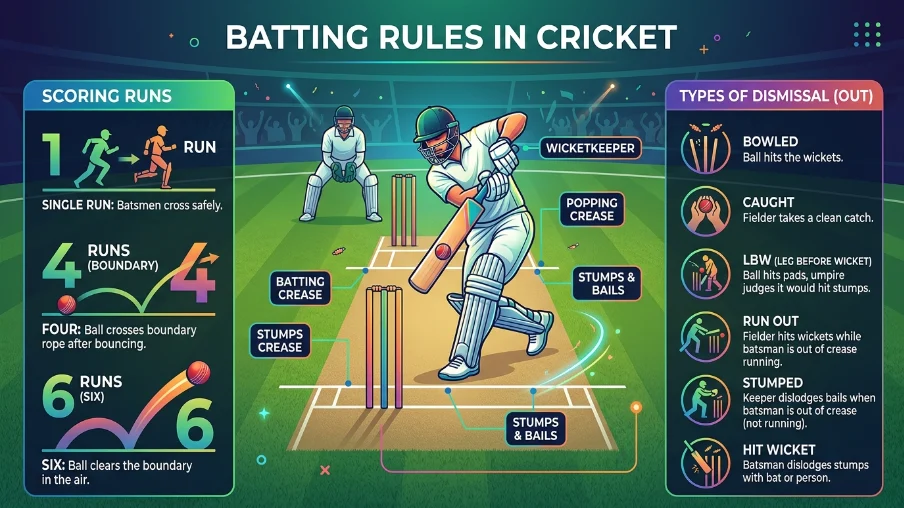

Batting rules in cricket define how a player scores runs and avoids dismissal. A batsman must hit the ball and run between wickets or score boundaries, while staying within the crease to remain safe.They can be dismissed in several ways, including bowled, caught, or run out. Understanding these rules helps players score efficiently and stay at the crease longer.
Cricket may look simple at first hit the ball and score runs but the batting rules in cricket are what truly shape the game. Whether you’re watching a match or stepping onto the field yourself, understanding these rules makes a huge difference.
Batting is not just about hitting the ball. It involves strategy, timing, awareness, and strict adherence to rules set by the game’s governing bodies. From how runs are scored to how a batsman gets out, every detail matters.
In this guide, you’ll learn everything about cricket batting rules in a clear and practical way.
What Is Batting in Cricket?
Batting is the act of scoring runs by hitting the ball bowled by the bowler.
The player who bats is called a batsman (or batter).
Each team gets a turn to bat, known as an innings, where they aim to score as many runs as possible.
Basic Batting Rules in Cricket
Here are the core rules every beginner must know:
1. Two Batsmen on the Field
- One is the striker (faces the ball)
- The other is the non-striker
2. Stay Within the Crease
- The batsman must remain inside the batting crease to avoid being run out or stumped
3. Score Runs
- Hit the ball and run between wickets
- Each successful run = 1 run
4. Protect the Wicket
- The batsman must stop the ball from hitting the stumps
How Runs Are Scored in Cricket
| Method | Runs Awarded | Description |
|---|---|---|
| Running between wickets | 1+ | Each completed run counts |
| Boundary (ball reaches rope) | 4 | Ball touches ground before boundary |
| Six | 6 | Ball crosses boundary without bouncing |
| Extras | Varies | Includes wides, no-balls, byes |
Types of Shots in Cricket Batting
Batting isn’t random it’s tactical.
Common Shots:
- Drive – Straight powerful shot
- Cut – Played square on off-side
- Pull – Played to short ball
- Sweep – Played to spin bowling
Each shot follows rules about safe play and positioning.
Ways a Batsman Can Get Out
Understanding dismissals is crucial to mastering batting rules in cricket.
| Type of Dismissal | Explanation |
|---|---|
| Bowled | Ball hits stumps |
| Caught | Ball caught before touching ground |
| LBW (Leg Before Wicket) | Body blocks ball hitting stumps |
| Run Out | Fielder hits stumps before batsman reaches crease |
| Stumped | Wicketkeeper removes bails while batsman is out of crease |
| Hit Wicket | Batsman hits stumps with body or bat |
| Obstructing Field | Intentionally blocking fielders |
Role of the Striker and Non-Striker
Striker
- Faces the bowler
- Decides shot and scoring
Non-Striker
- Supports run-making
- Must stay alert for quick runs
Important Crease Rules
- The crease is a safety zone
- A batsman is safe only when:
- Bat or body touches ground behind the crease line
- Leaving the crease at the wrong time can lead to:
- Run out
- Stumping
Fielding Restrictions That Affect Batting
In modern cricket (especially limited-overs formats):
- Powerplay overs restrict fielders outside circle
- This gives batsmen more scoring opportunities
Batting Strategy Basics
Good batting is not just about rules it’s about smart decisions.
Key Strategies:
- Rotate strike frequently
- Build partnerships
- Avoid risky shots early
- Target weak bowlers
Common Mistakes Beginners Make
- Not grounding the bat properly
- Poor shot selection
- Ignoring field placements
- Running without communication
- Stepping out too early
Batting Rules Comparison
| Format | Overs | Batting Style |
|---|---|---|
| Test | Unlimited | Defensive + strategic |
| ODI | 50 overs | Balanced approach |
| T20 | 20 overs | Aggressive batting |
Advanced Batting Concepts
Strike Rotation
Keeping scoreboard ticking with singles
Strike Rate
Runs scored per 100 balls
Partnerships
Two batsmen working together to build innings
FAQs
1. What are the basic batting rules in cricket?
Batting rules in cricket involve scoring runs while protecting your wicket. A batsman hits the ball and runs between wickets or scores boundaries. Staying within the crease ensures safety, while breaking rules or poor play can lead to dismissal.
2. How does a batsman score runs?
Runs are scored by running between wickets after hitting the ball or by hitting boundaries. A boundary gives four runs, while a six is awarded when the ball crosses the boundary without bouncing.
3. What is LBW in cricket?
LBW (Leg Before Wicket) occurs when the ball hits the batsman’s body instead of the bat, and the umpire believes it would have hit the stumps. It is a common dismissal rule.
4. What is the role of a batsman?
The batsman’s main role is to score runs and stay at the crease as long as possible. They must also build partnerships and handle different types of bowling.
5. What happens if a batsman leaves the crease?
If a batsman leaves the crease without completing a run, they risk being run out or stumped. Staying within the crease is crucial for survival.
6. What is a striker in cricket?
The striker is the batsman facing the bowler. They play the ball and decide how runs are scored.
7. Can a batsman be out without hitting the ball?
Yes. A batsman can be out LBW, run out, or stumped without hitting the ball.
8. What is a boundary in cricket?
A boundary occurs when the ball reaches the edge of the field. It gives four or six runs depending on whether the ball bounces.
9. Why is batting important in cricket?
Batting determines how many runs a team scores. Strong batting increases chances of winning.
10. What are extras in cricket batting?
Extras are runs not scored by the batsman but awarded due to bowling errors or fielding mistakes, such as wides or no-balls.
Conclusion
Understanding the batting rules in cricket is essential for anyone who wants to enjoy or play the game properly. These rules define how players score runs, stay safe, and contribute to their team’s success. From basic concepts like running between wickets to advanced strategies like strike rotation, batting is both a skill and a discipline.
Cricket has evolved over the years, but the core batting principles remain consistent across formats. Whether you’re watching a Test match or a fast-paced T20 game, these rules form the foundation of every innings.
For beginners, mastering these basics builds confidence. For experienced players, refining techniques within these rules can make a huge difference. Ultimately, batting is not just about hitting the ball it’s about smart decisions, timing, and understanding the game deeply.