
A hit wicket dismissal occurs when a batter accidentally breaks their own stumps with their bat, body, or equipment while playing a shot or setting off for a run, immediately after the ball has been legally bowled. It’s one of the rarest, and often most self-inflicted, ways to get out in cricket.
Hit wicket is one of cricket’s most unusual dismissals a batter getting themselves out, often without the bowler or fielders doing anything at all. This guide explains exactly when a hit wicket applies, the specific exceptions that protect batters in certain situations, and some of the more memorable examples from the sport.
What Is a Hit Wicket in Cricket?
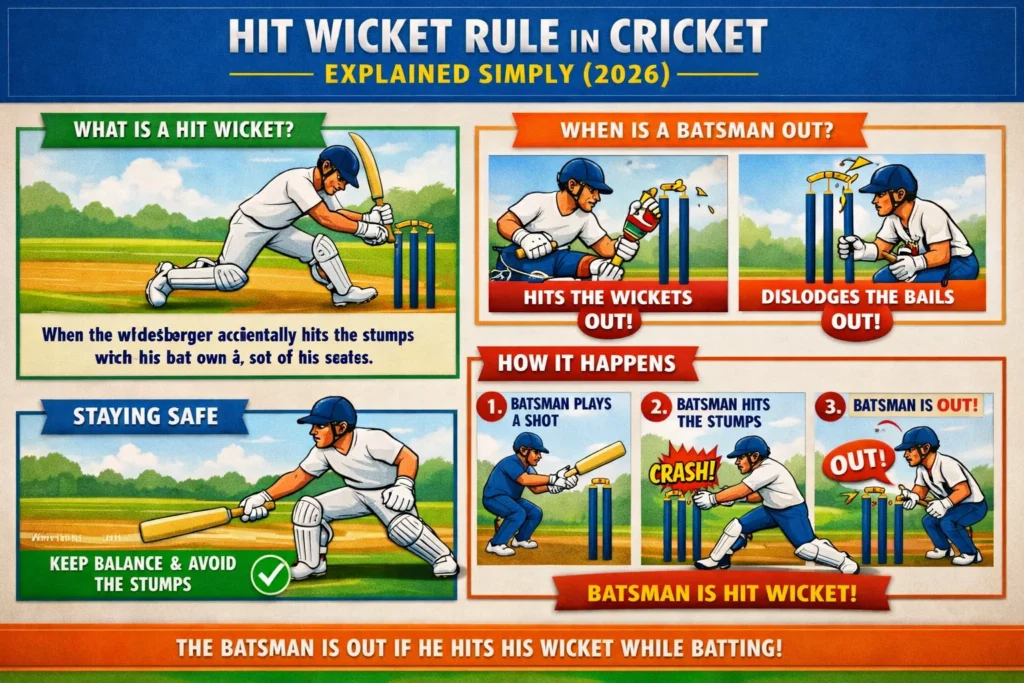
A hit wicket happens when the batter on strike dislodges the bails or breaks the stumps themselves using their bat, body, clothing, or equipment while in the act of playing a shot, setting off for their first run, or avoiding a delivery, after the bowler has entered their delivery stride.
Unlike almost every other dismissal, the batter causes their own downfall here, which is why it’s often considered an embarrassing way to get out, even though it’s a perfectly standard part of the laws of cricket.
The Official Conditions for a Hit Wicket
For a batter to be given out hit wicket, the following must apply:
- The bowler must have entered their delivery stride — meaning the action must occur once the ball is legitimately in play, not during a bowler’s run-up before delivery.
- The batter must break the stumps themselves — using their bat, body, helmet, clothing, or any equipment being worn or carried.
- It must happen while playing a shot, avoiding the ball, or setting off for a run — this covers a wide range of situations, not just the moment of the shot itself.
If the stumps are broken before the bowler enters their delivery stride (for example, a batter accidentally backing into the stumps while adjusting their stance early), it is not out.
Common Ways a Hit Wicket Happens
1. Overbalancing While Playing a Shot
The most frequent cause a batter swings hard at a shot, loses balance, and steps backward onto their own stumps.
2. Helmet or Equipment Falling Onto the Stumps
If a batter’s helmet, which is often placed on the ground behind the wicketkeeper during play, is knocked into the stumps by the batter themselves while playing a shot, it counts as hit wicket.
3. Ducking or Avoiding a Bouncer
A batter ducking under a short-pitched delivery can sometimes dislodge the bails with their body or bat, which is also given as hit wicket.
4. Setting Off for a Run
If a batter, immediately after playing a shot, steps back and disturbs their own stumps while beginning to run, this also qualifies.
Important Exceptions: When It’s NOT a Hit Wicket
Cricket’s laws include a few specific protections for batters:
- If the stumps are broken while the batter is avoiding a fielder’s throw during a run (not the very first movement after playing the ball), it is generally not given out hit wicket.
- If the bails fall due to wind, ground vibration, or any cause unrelated to the batter’s action, it is not out.
- If the ball itself, after being played, rebounds off the batter’s body or bat and breaks the stumps without the batter causing direct contact through their own action, umpires assess this carefully the key factor remains whether the batter’s own movement (not the ball’s natural rebound path) caused the disturbance.
Hit Wicket vs Other Dismissals
| Feature | Hit Wicket | Bowled | Run Out |
|---|---|---|---|
| Who breaks the stumps | The batter themselves | The ball (bowled by bowler) | Any fielder |
| Credited to bowler? | Yes | Yes | No |
| Requires bowler’s delivery stride? | Yes | Yes | No |
| Can happen while running? | Yes, right after playing a shot | No | Yes |
Hit wicket is credited to the bowler in the scorebook, similar to a stumping, even though the batter effectively dismisses themselves.
For more on how other dismissals compare, see our guides on Run Out Rule in Cricket Explained and Stumping Rule in Cricket Explained.
Why Hit Wicket Is So Rare
Hit wicket dismissals are uncommon because they require a very specific, almost accidental sequence of events a batter losing balance, dislodging their own equipment, or making unintentional contact with their stumps, all within a tight time window connected directly to playing the ball. Most professional batters, through years of practice, rarely find themselves close enough to their stumps for this to become a realistic risk, which is part of why it stands out so much on the rare occasions it does happen.
Hit Wicket Across Formats
The rule itself is identical across Test, ODI, and T20 cricket there’s no format-specific variation in how hit wicket is defined. What differs slightly is the context in which it tends to occur:
- T20 cricket — More common due to batters playing high-risk, off-balance shots while trying to maximize power and boundary-hitting.
- Test cricket — Rarer, and often associated with batters ducking into short-pitched bowling on bouncier pitches.
- ODI cricket — Occurs occasionally during aggressive strokeplay, particularly in the death overs.
To understand these format differences further, see our guides on T20 Cricket, Test Cricket, and ODI Cricket.
Interesting Facts About the Hit Wicket Rule
- Hit wicket is considered one of the rarest dismissals in international cricket, with far fewer recorded instances than run outs, stumpings, or catches across a typical season.
- A batter can be given out hit wicket even from something as small as a helmet resting behind them being nudged into the stumps during a shot.
- The rule applies even if the batter doesn’t actually get hit by the ball at all simply losing balance while attempting to avoid it is enough.
- Some hit wicket dismissals have occurred purely from a batter’s follow-through on a big shot, with no contact from the ball whatsoever.
- Unlike stumpings, a hit wicket requires no fielding involvement at all the wicketkeeper, bowler, and fielders don’t need to touch the ball or stumps in any way.
- Despite being extremely rare, hit wicket has occurred in high-profile matches, including instances involving some of the sport’s most accomplished batters, showing that no one is fully immune to the mistake.
Frequently Asked Questions
1. Is hit wicket credited to the bowler? Yes, similar to a stumping, a hit wicket dismissal is credited to the bowler in the scorecard, even though the batter causes their own downfall.
2. Can a batter be out hit wicket while ducking a bouncer? Yes, if the batter’s body or bat disturbs the stumps while avoiding a short-pitched delivery, it can be given as hit wicket.
3. Does hit wicket count if the batter’s helmet falls onto the stumps? Yes, if a helmet placed on the ground is knocked into the stumps by the batter’s own action while playing a shot, it counts as hit wicket.
4. Can a batter be out hit wicket before the bowler releases the ball? No, the dismissal only applies once the bowler has entered their delivery stride any earlier contact with the stumps does not count.
5. Is hit wicket a common dismissal in cricket? No, it’s one of the rarest dismissal types in the sport, since it requires a very specific combination of balance loss and stump contact tied directly to playing the ball.
Conclusion
Hit wicket stands out as cricket’s most self-inflicted dismissal a batter, often mid-shot or avoiding a bouncer, accidentally breaking their own stumps. While rare, understanding its exact conditions and exceptions helps explain why some of the most surprising dismissals in cricket history have come not from the bowler’s skill, but from a batter’s own momentum.
For more on related dismissals and fielding rules, explore our guides on Fielding Rules in Cricket and our Complete Cricket Rules Guide 2026.